Fushimi Inari: The Spiritual Meaning Behind 10,000 Torii
You've seen the endless tunnel of orange gates in Memoirs of a Geisha, on a thousand Instagram feeds and in more anime than anyone can count. Here's why the gates are there, who paid for them, and what most visitors miss on the way up.
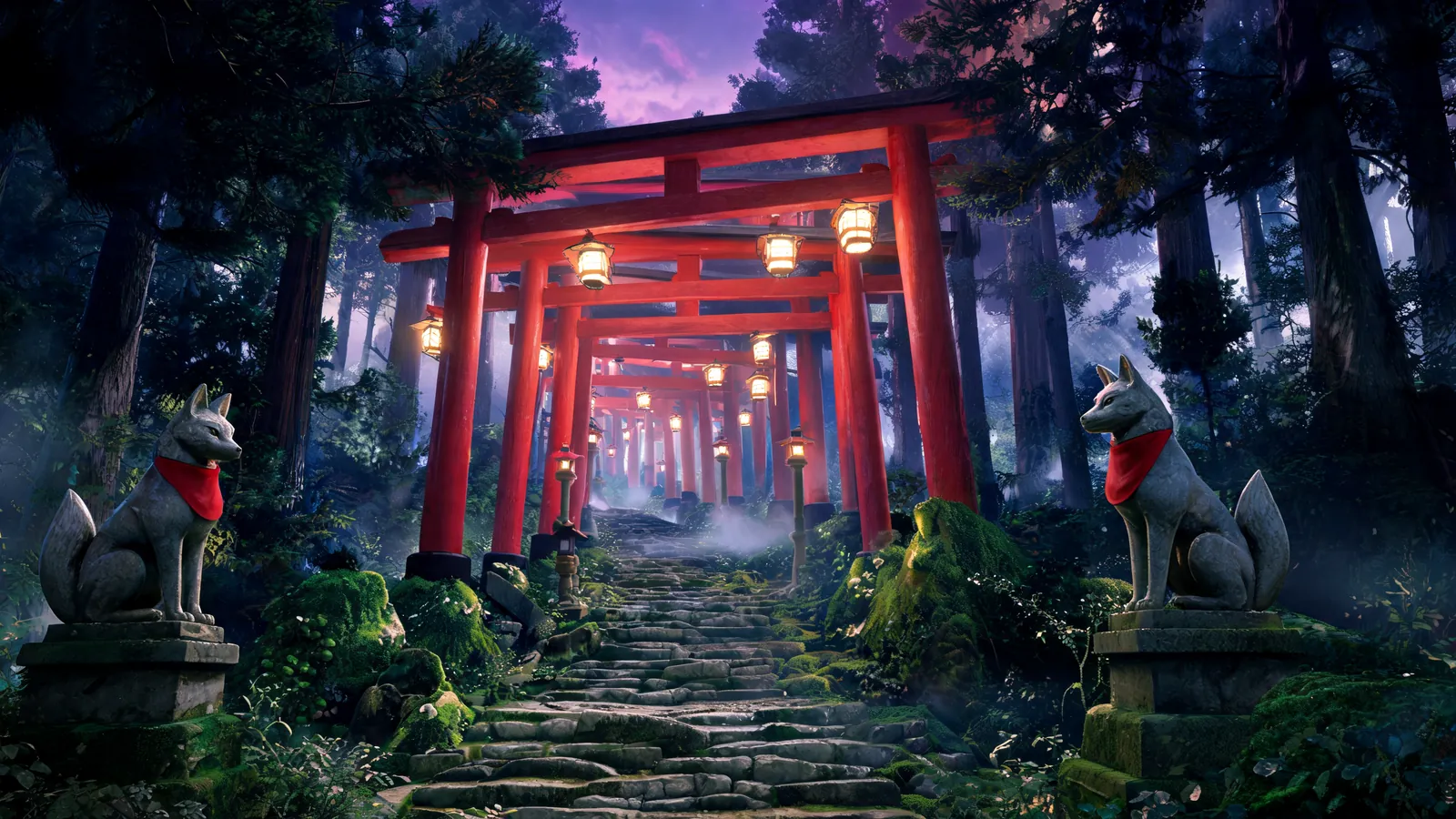
Most people know Fushimi Inari as a photo. A tunnel of orange gates, a little mist, ideally nobody else in the frame. That last part takes some planning, because this is one of the most visited places in Japan. But the gates aren't there for the photo, and they weren't put up by an architect. Every single one of them has a story, and most of those stories begin with a wish.
A rice cake that flew away
Fushimi Inari Taisha (伏見稲荷大社) lies in the south of Kyoto at the foot of Mount Inari. According to the shrine's own tradition it was founded in 711. An old local record tells the founding legend. A wealthy man of the Hata clan, a powerful immigrant family in the Kyoto basin, used a rice cake as an archery target. The rice cake turned into a white bird, flew off, and came down on the mountain, where rice began to grow. The place was called ina-nari, "where the rice grows," and that's one of the explanations given for the name Inari.
It's a story about respect for food, and about the idea that the power of growth can't be owned. You can treat it as a fable. In Japan, people have treated it as the foundation of one of the biggest networks of shrines in the country. Fushimi Inari is the head shrine of around thirty thousand Inari shrines throughout Japan.
Inari and the foxes
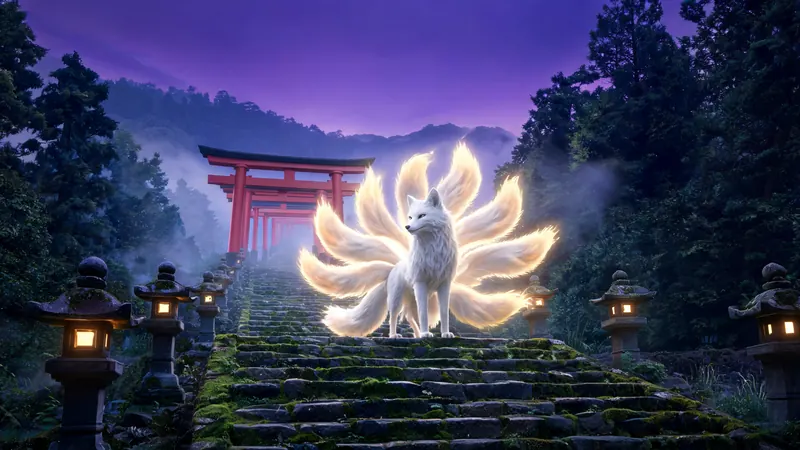
Inari Ōkami is the kami of rice, harvest and prosperity, and by extension of business success. The foxes you'll see everywhere on the mountain are the messengers. They carry keys, jewels, scrolls and ears of rice in their mouths. I've explained the difference, and the whole fox lore that comes with it, in the article on the nine-tailed fox. One small detail is worth looking for here: many of the votive tablets at Fushimi Inari are shaped like fox heads, and visitors draw a face on them. Some are serious, many are funny, and quite a few look like anime characters.
There's also a Buddhist side to the story. For centuries Fushimi Inari served as the protective shrine of Tō-ji, the great temple that the emperor gave to Kūkai in 823. According to tradition, Kūkai himself honored Inari as a protector of his temple, and during Tō-ji's spring festival the portable shrines of Inari still pass by the temple. In Japan kami and buddhas lived side by side for over a thousand years, and here you can still see it.
Why there are ten thousand gates
A torii (鳥居) marks the entrance to sacred ground. Most shrines have one or two. Fushimi Inari has roughly ten thousand, and the reason is quite practical. Each one was donated. People and companies give a torii to the shrine in gratitude for a wish that has come true, or in the hope that one will. Since Inari is the kami of prosperity, a lot of businesses do this, from small family shops to large corporations.
Walk up through the famous double row called Senbon Torii, the "thousand torii," and then turn around. On the back of each pillar, the side you see on the way down, you'll find the name of the donor and the date in black characters. In other words, the tunnel is a huge, living list of thank-you notes, and it's renewed all the time, because the wood weathers and old gates are replaced by new ones.
The color has its own meaning. The vermilion red, shu, is considered protective, and it's associated with the power of life and of the harvest. The paint traditionally also preserved the wood, which is a very Japanese way of combining the sacred and the practical.
What most visitors miss
Most people walk the first few hundred meters of gates, take their pictures and turn back. That's a pity, because the mountain itself is the real shrine. The full loop to the summit, at about 233 meters, and back down takes two to three hours on foot. The crowds thin out quickly once you climb.
On the way you'll find:
- The heavy-light stones. At the inner shrine, Okusha Hōhaisho, there are two stone lanterns with round stones on top. You make a wish and lift the stone. If it feels lighter than you expected, the wish is said to come true. If it's heavier, you'll need more patience.
- The otsuka. Higher up, the paths are lined with thousands of small stone mounds and altars, each with its own name for Inari, set up by families, groups and individuals. That's where you see how personal this faith is. Many people have their very own form of Inari.
- The view. At the Yotsutsuji crossing, about halfway, you look out over the whole of Kyoto. At sunset it's one of the most beautiful views of the city.
- Small tea houses. Old family stands along the path sell kitsune udon with fried tofu, said to be the foxes' favorite food, and inari-zushi, rice in fried tofu pockets.
In May 2027 Eileen and I travel to Japan with a small group. Everything about the Spiritual Journey to Japan is on the Japan page of shingon-reiki.com.
How to visit with respect
You don't need to be a believer to visit. A few small things go a long way, though. Bow briefly before you pass through the first large torii. Walk a little to the side of the path, because the middle is said to belong to the kami. At the main hall you can make a short prayer: put a coin in the box, bow twice, clap twice, and bow once more. Please don't climb on the fox statues, and don't carve anything into the torii. They are thank-you notes, after all.
If you go early in the morning or after dark, you'll have the gates mostly to yourself. Fushimi Inari is open around the clock, and at night, with the lanterns lit, the mountain feels very different.
If you could donate a torii, what would you write on it?
The Energy Between Your Hands
If you'd like to hear about new articles on Japan's sacred places, and about the small-group trip to Japan in May 2027, leave your email. You'll get a short practice from the Japanese tradition as a free PDF.
Free. Unsubscribe anytime. Privacy policy
Quick answers
Why are there so many torii at Fushimi Inari?
Each torii was donated by a person or a company, usually in gratitude for a wish that came true or in the hope that one will. The donor's name and the date are written on the back of the pillar. Over the centuries this added up to roughly ten thousand gates on Mount Inari.
Is Inari a fox?
No. Inari is a kami of rice, harvest and prosperity. The foxes are Inari's messengers.
How long does it take to walk to the top of Mount Inari?
The full loop to the summit and back takes about two to three hours on foot. Most visitors only walk the first section, the Senbon Torii, and turn around.
When was Fushimi Inari founded?
According to shrine tradition in 711, by the Hata clan, an influential immigrant family in the Kyoto basin.
Sources and further reading
- Fushimi Inari Taisha, official information on its history, the torii donations and the Oyama pilgrimage.
- Yamashiro no kuni fudoki (fragment), founding legend of Inari and the rice cake that turned into a bird.
- Karen A. Smyers, The Fox and the Jewel: Shared and Private Meanings in Contemporary Japanese Inari Worship, University of Hawai'i Press, 1999.

Dr. Mark Hosak
Japanologist with a PhD from Heidelberg University and about three years of research at Kyoto University on Buddhist art, architecture and ritual. Shingon practitioner and researcher, successor of Taguchi Sensei in his line of Ninjutsu, author of books on Reiki and its Japanese roots. He walked all 88 temples of the Shikoku pilgrimage on foot.