Kappa: The Water Yokai Explained
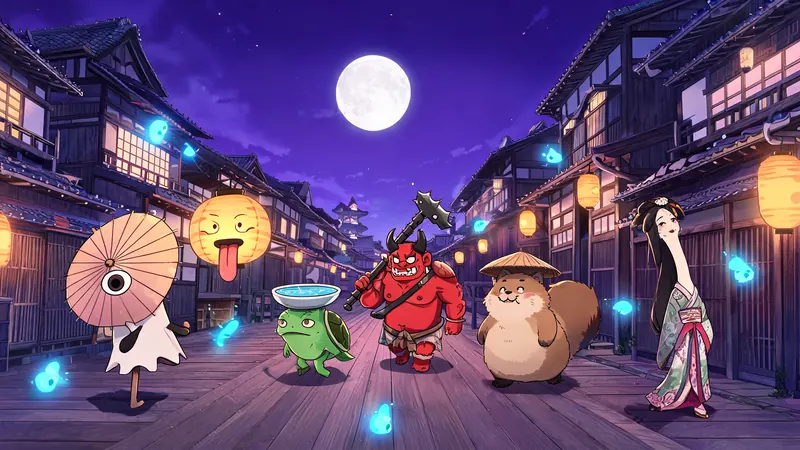
You've seen the little green creature with a dish on its head in Kitarō, Natsume's Book of Friends and Summer Days with Coo. Japan's river imp is polite, dangerous, obsessed with cucumbers and, if the legends are true, a decent bonesetter.
If Japan had a national yokai, the kappa would be a strong candidate. It's on sake labels and snack bags, on warning signs at rivers, in children's books and as a mascot of half a dozen towns. It also has a long record of drowning people. Both sides belong to the same creature, and that's what makes it interesting.
What a kappa looks like
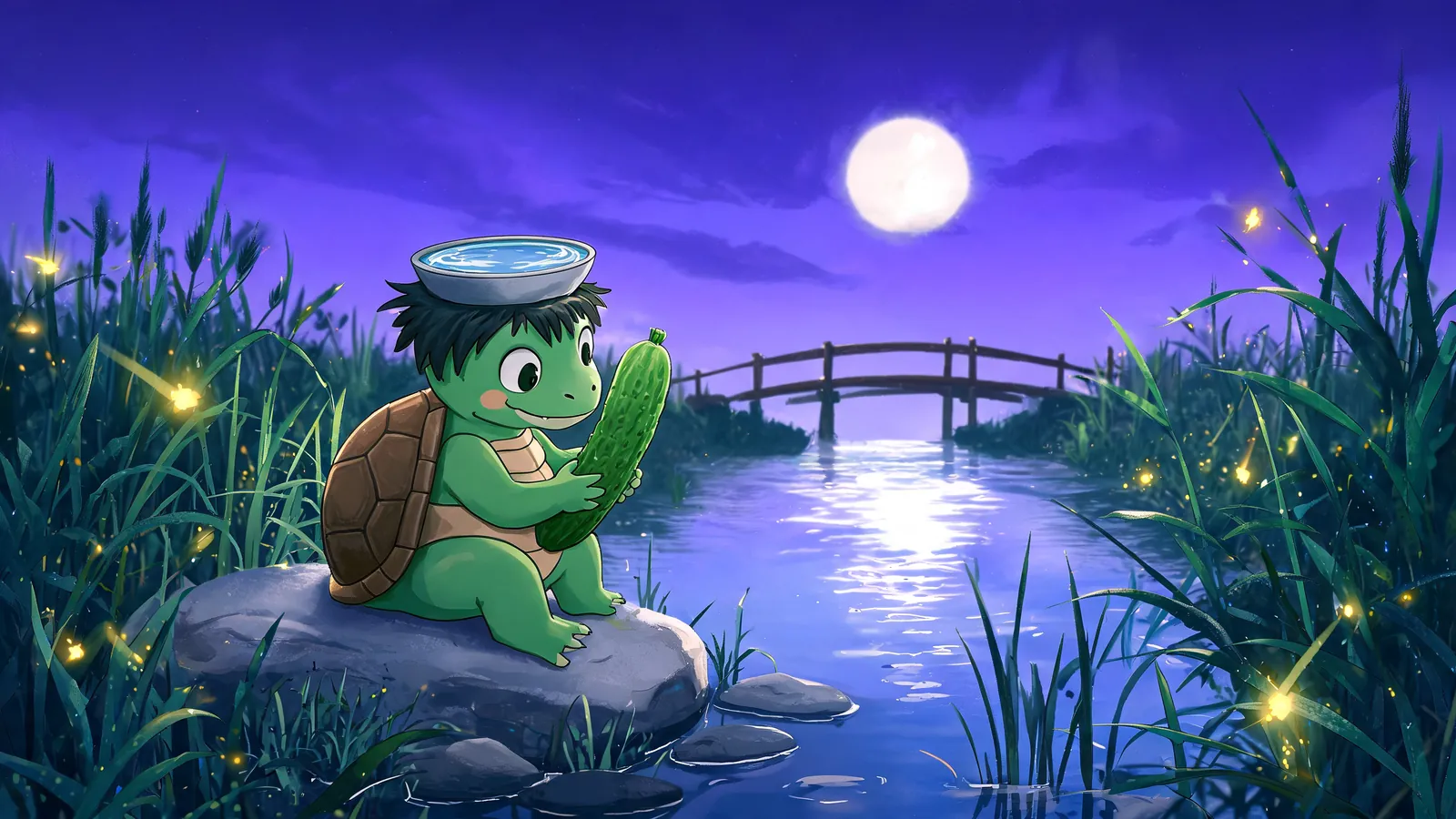
The name kappa (河童) means "river child." It's about the size of a child of ten, green or yellowish-brown, with a short beak, a shell on its back like a turtle, webbed hands and feet and, the most important feature, a shallow dish on top of its head, the sara, surrounded by a ring of hair. The dish holds water, and the water holds the kappa's strength. As long as it's full, the kappa is far stronger than any human.
Regional names show how widespread the belief was: kawatarō, "river boy," in many parts of western Japan, gataro in Kansai, enkō on Shikoku, suiko in Kyushu, and many more. The descriptions differ a little from region to region. Some kappa look more like monkeys, some more like otters.
Dangerous and very polite
In the old stories, kappa lurk in rivers, ponds and irrigation canals. They pull horses and cows into the water, and they drown children who swim alone. The more drastic legends say that they pull out a mysterious ball believed to sit inside the human body, which kills the victim. It's a folk explanation for drowning that kept children away from dangerous water for generations.
But the kappa has one great weakness, its manners. If you meet one, bow deeply. The kappa will bow back, the water spills out of its dish, and it becomes weak and harmless. It's a very Japanese kind of self-defense, and it's hard not to like it. Kappa also love sumo and challenge passing humans to a match. Bowing before the bout is part of sumo etiquette, which makes the trick work again.
Cucumbers
The kappa's favorite food is the cucumber. In some regions families used to throw the first cucumbers of the summer into the river, sometimes with the names of their children carved into them, to ask the river spirit to leave those children alone. That's why the cucumber sushi roll is called kappa maki. When you order one, you're eating the offering.
The kappa who paid with medicine
A whole group of legends tells of kappa who tried to drag a horse into the river and got caught, or who grabbed a samurai and had their arm cut off. The kappa then comes back at night, begging for the arm. In exchange for its return, it promises never to harm anyone in the village again, and often it reveals a secret formula for an ointment that sets bones and closes wounds. Several old families in Japan claimed that their traditional medicines came from a grateful kappa. Whatever you make of that, it's a nice example of how Japanese folklore lets a dangerous being turn into a helper once a bond has been made.
Where the kappa came from
There are several theories. The folklorist Yanagita Kunio thought that many yokai, the kappa among them, were water kami who had lost their worship and become unpredictable. That fits the cucumber offerings very well. In Kyushu, in Yatsushiro in Kumamoto Prefecture, a local legend says that the kappa came across the sea from China, a whole clan of them, and settled in the Kuma River. A monument by the river commemorates their arrival.
The classic picture of the kappa took shape in the Edo period, when naturalists collected reports of sightings and artists such as Toriyama Sekien drew them in their yokai catalogues. Some Edo-period scholars treated the kappa as a real animal, to be classified next to otters and turtles.
Kappa in modern Japan
Today the kappa is mostly cute. It's a mascot of towns, sake brewers and snack makers. The writer Akutagawa Ryūnosuke wrote a satirical novel called Kappa in 1927, about a man who stumbles into a kappa society. The anime film Summer Days with Coo tells of a boy who finds a kappa child. But the old function hasn't disappeared. Near many rivers you'll still see signs with a kappa on them warning children not to swim there alone.
Where you can meet kappa today
- Tōno, Iwate. The kappa pool behind the temple Jōken-ji, where locals leave cucumbers on a fishing rod. The tourist office even sells a kappa-catching permit.
- Sōgen-ji, Tokyo. Known as the kappa temple, near Asakusa, with kappa statues and paintings.
- Kappabashi, Tokyo. The kitchenware street, with a golden kappa statue. One explanation of the name involves kappa who helped dig a canal, another the raincoats once sold there, also called kappa from the Portuguese word capa.
- Yatsushiro, Kumamoto. The monument to the kappa's arrival from China on the Kuma River.
If you met a kappa by the river tonight, would you bow, or offer it a cucumber?
The Energy Between Your Hands
There are many more Japanese spirits to meet on this site. Leave your email and you'll hear about new ones, plus a short practice from the Japanese tradition as a free PDF.
Free. Unsubscribe anytime. Privacy policy
Quick answers
What is a kappa?
A kappa (河童, 'river child') is a water yokai of Japanese folklore, usually shown as a child-sized green or brown creature with a beak, a shell on its back, webbed hands and a dish of water on top of its head that holds its strength.
Why do kappa like cucumbers?
In folklore cucumbers are the kappa's favorite food, and people offered them to river spirits, sometimes with the family's names carved in, so that children could swim safely. That's why cucumber sushi rolls are called kappa maki.
How do you defeat a kappa?
According to the stories, you bow. A kappa is extremely polite and bows back, the water spills out of the dish on its head, and it loses its strength.
Where can you see kappa in Japan?
In Tōno in Iwate with its kappa pool, at Sōgen-ji in Tokyo's Asakusa area, known as the kappa temple, along Kappabashi kitchen street, and on countless warning signs near rivers.
Sources and further reading
- Michael Dylan Foster, The Book of Yōkai, University of California Press, 2015.
- Yanagita Kunio, Tōno Monogatari (1910).
- Toriyama Sekien, Gazu Hyakki Yagyō (1776); Hiroko Yoda and Matt Alt, Japandemonium Illustrated, Dover, 2017.
Dr. Mark Hosak
Japanologist with a PhD from Heidelberg University and about three years of research at Kyoto University on Buddhist art, architecture and ritual. Shingon practitioner and researcher, successor of Taguchi Sensei in his line of Ninjutsu, author of books on Reiki and its Japanese roots. He walked all 88 temples of the Shikoku pilgrimage on foot.