Mudras in Japanese Esoteric Buddhism: The Hand Seals Behind Kuji-in
You've seen yoga teachers touch thumb and finger, and anime sorcerers lock their hands before a jutsu. Japan's temples have their own world of hand seals, and every statue is quietly using one.
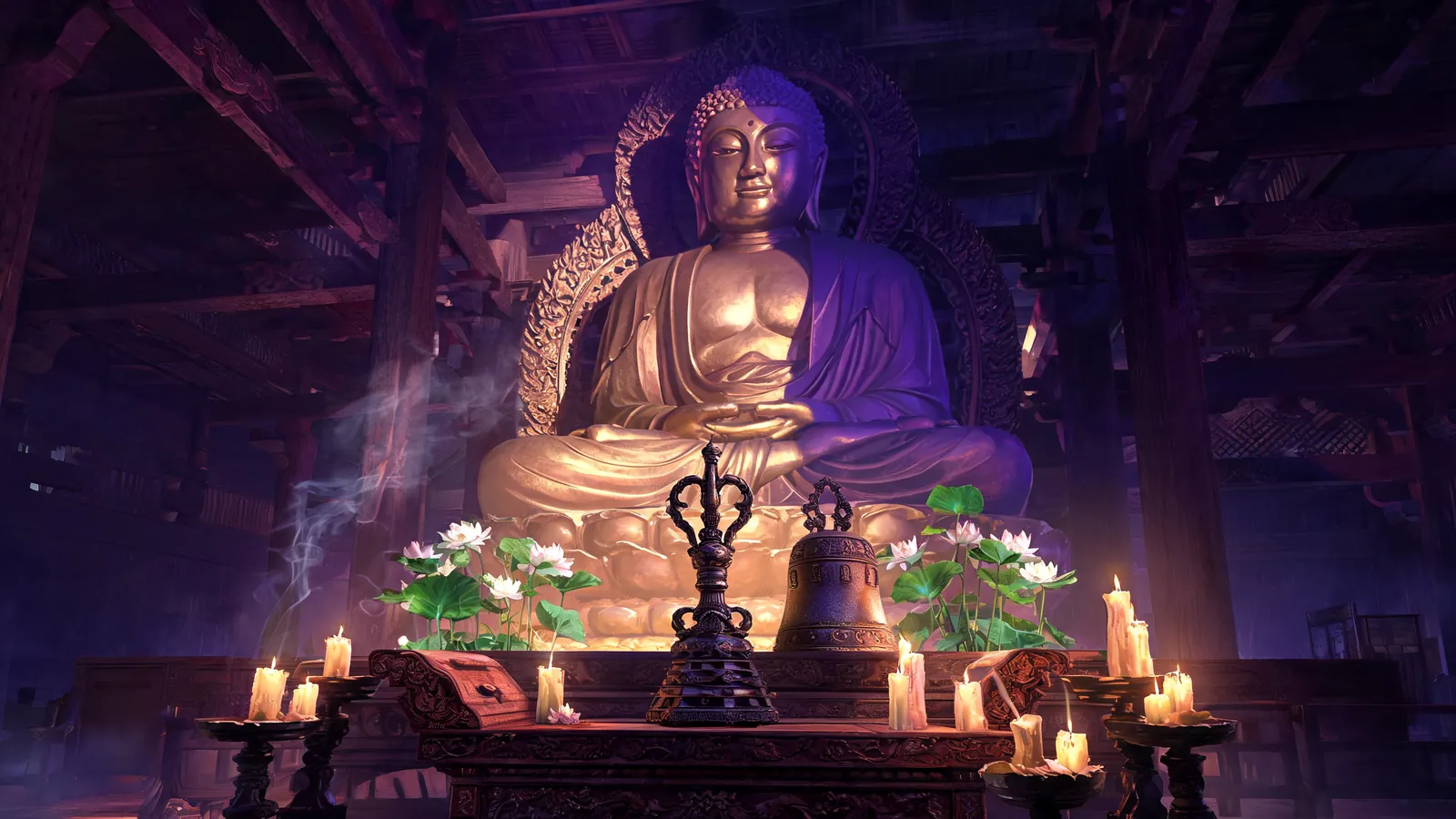
Search for "mudras" in English, and you'll mostly find yoga: thumb and index finger touching, a few lines on what each gesture does for your breath. That's one branch of a very old tree. Another branch grew all the way to Japan, and there it took a shape that most people in the West have never heard about, although they've seen it hundreds of times on buddha statues and in anime.
A seal, not a gesture
The Sanskrit word mudrā means a seal or a sign. In Japanese it's in (印), the same character you find on a name stamp, or more formally ingei (印契). I like the word seal much better than gesture, because it captures the idea. A seal confirms something, and it closes a connection.
In the esoteric Buddhism of Japan, mikkyō, which Kūkai brought from China in the early ninth century, every buddha, bodhisattva, wisdom king and protective being has its own seal. It goes together with a mantra and with a seed syllable in the Siddham script (Bonji in Japanese). Shingon calls this the three mysteries, sanmitsu (三密): the body forms the seal, the voice speaks the mantra and the mind holds the image. Put simply, the hands are one third of a conversation.
The five elements in your fingers
Here comes the part I find most interesting. In Shingon the hands themselves are a small map of the universe. The right hand stands for the world of the buddhas, the left hand for the world of living beings. When the two come together, as in the simple joined palms, gasshō, both worlds meet.
The five fingers stand for the five elements of esoteric Buddhism:
| Finger | Element |
|---|---|
| Little finger | Earth |
| Ring finger | Water |
| Middle finger | Fire |
| Index finger | Wind |
| Thumb | Space, emptiness |
Once you know that, a mudra stops being a nice shape and starts being a statement. Bringing a certain finger into contact with another, folding one in, raising one up, all of that says something about how the elements are combined. The same five elements appear in the five-tiered stone pagodas you see in Japanese cemeteries, the gorintō, stacked from earth at the bottom to space at the top. Japan likes to say the same thing in many materials.
How to read a buddha statue
You can practice reading mudras in any Japanese temple, and it makes every visit more interesting. Look at the hands first, before the face. A few of the most common seals:
- The fear-not seal (semui-in, 施無畏印). The right hand is raised, palm outward. It says: don't be afraid.
- The wish-granting seal (yogan-in, 与願印). The left hand is lowered, palm outward, as if offering something. The Great Buddha of Tōdai-ji in Nara shows these two together.
- The meditation seal (jōin, 定印). Both hands rest in the lap. The Great Buddha of Kamakura and the Amida of Byōdō-in near Kyoto sit like this.
- The wisdom fist (chiken-in, 智拳印). One hand encloses a raised finger of the other. This is the seal of Dainichi Nyorai, the great sun buddha, in the Diamond Realm, the very center of the Shingon world.
Amida alone is said to have nine variations of his seal, one for each of the nine grades of rebirth in his Pure Land. And esoteric ritual manuals list hundreds of seals. Most of them never appear on a statue, because they were meant for the hands of practitioners, not for public display.
From temple seals to Kuji-in
This is where the nine seals of Kuji-in come in. The earliest sources for the nine characters come from China. In Japan, over centuries, the formula grew together with the hand seals of esoteric Buddhism, with Japanese folk magic and with the mountain practice of Shugendō, until it became a system you only find in Japan. Each of the nine characters received its own seal, and in many lineages each is linked with a particular being. The lists differ from lineage to lineage, which is normal for a practice that was handed down in many separate lines.
That's also the honest answer to a question I hear a lot: are the anime hand signs real? The idea is real. Seals formed with the hands really are a central part of Japanese esoteric practice, and they're connected to specific beings and sounds. The specific signs in a given series are mostly the artist's own design. I go into this for Naruto and Jujutsu Kaisen in separate articles.
The nine mudras of Kuji-in are the focus of Kuji Kiri Level 3 within the Kuji Kiri Master Path. Dates are on the Kuji Kiri page of shingon-reiki.com. To start at home, there's the Kuji Kiri Level 1 Online Course.
Why I don't explain how to form them
You'll notice I've described what the seals mean without explaining how to hold your fingers for the esoteric ones. That's deliberate. In this tradition a mudra is passed on in person, together with its mantra and its meaning, because the outer shape alone is only one third of the three mysteries.
Where you can see mudras today
- Tōdai-ji, Nara. The Great Buddha with the fear-not and wish-granting seals.
- Kōtoku-in, Kamakura. The Great Buddha of Kamakura in the meditation seal, outdoors.
- Byōdō-in, Uji. Amida in the meditation seal, in the Phoenix Hall.
- Tō-ji, Kyoto, and Kōyasan. The buddhas and wisdom kings of Shingon, Dainichi with the wisdom fist included.
Next time you stand in front of a buddha statue, will you look at the hands first?
The Japanese Grimoire Society
In the Japanese Grimoire Society we look at the hand seals with the original sources at hand, and at the practice that grows out of them. You can start with a free trial and look around.
Have a look insideQuick answers
What is a mudra in Japanese Buddhism?
A mudra, in Japanese in (印) or ingei (印契), is a hand seal. In statues it identifies a buddha or bodhisattva and expresses its vow. In the rituals of esoteric Buddhism the practitioner forms the seal of a being together with its mantra and its visualization.
How are Japanese mudras different from yoga mudras?
Both come from the same Indian roots. Yoga mudras are mostly used for breath, energy and posture. In Japanese esoteric Buddhism each mudra belongs to a specific buddha, bodhisattva or protective being, and it is used together with that being's mantra and seed syllable.
Are the Kuji-in hand seals Buddhist mudras?
The nine seals of Kuji-in draw on the mudras of Japanese esoteric Buddhism, combined with Daoist and Japanese folk elements. Different lineages link each seal with different beings.
Sources and further reading
- E. Dale Saunders, Mudrā: A Study of Symbolic Gestures in Japanese Buddhist Sculpture, Princeton University Press, 1960.
- Mark Hosak, chapters on Siddham, mudras and Kuji kiri in The Big Book of Reiki Symbols: The Spiritual Transition of Symbols and Mantras of the Usui System of Natural Healing (Lotus Press).
- Tōdai-ji, Kōtoku-in (Kamakura) and Byōdō-in, temple information on their main images.
Dr. Mark Hosak
Japanologist with a PhD from Heidelberg University and about three years of research at Kyoto University on Buddhist art, architecture and ritual. Shingon practitioner and researcher, successor of Taguchi Sensei in his line of Ninjutsu, author of books on Reiki and its Japanese roots. He walked all 88 temples of the Shikoku pilgrimage on foot.