Are Naruto Hand Signs Real? The Kuji-in Behind the Jutsu
You've seen Naruto, Sasuke and Kakashi rattle through hand signs at top speed. Some of what's behind them is pure invention, and some of it is older than any ninja.
Let me get the short answer out of the way. The hand signs in Naruto, as a system, are an invention of the series. You won't find an old ninja scroll that lists exactly those twelve signs in exactly that order. But the idea behind them, that you form a seal with your fingers and something changes, is very real in Japan. And Kishimoto borrowed more from Japanese tradition than most viewers notice.
Twelve signs, twelve animals
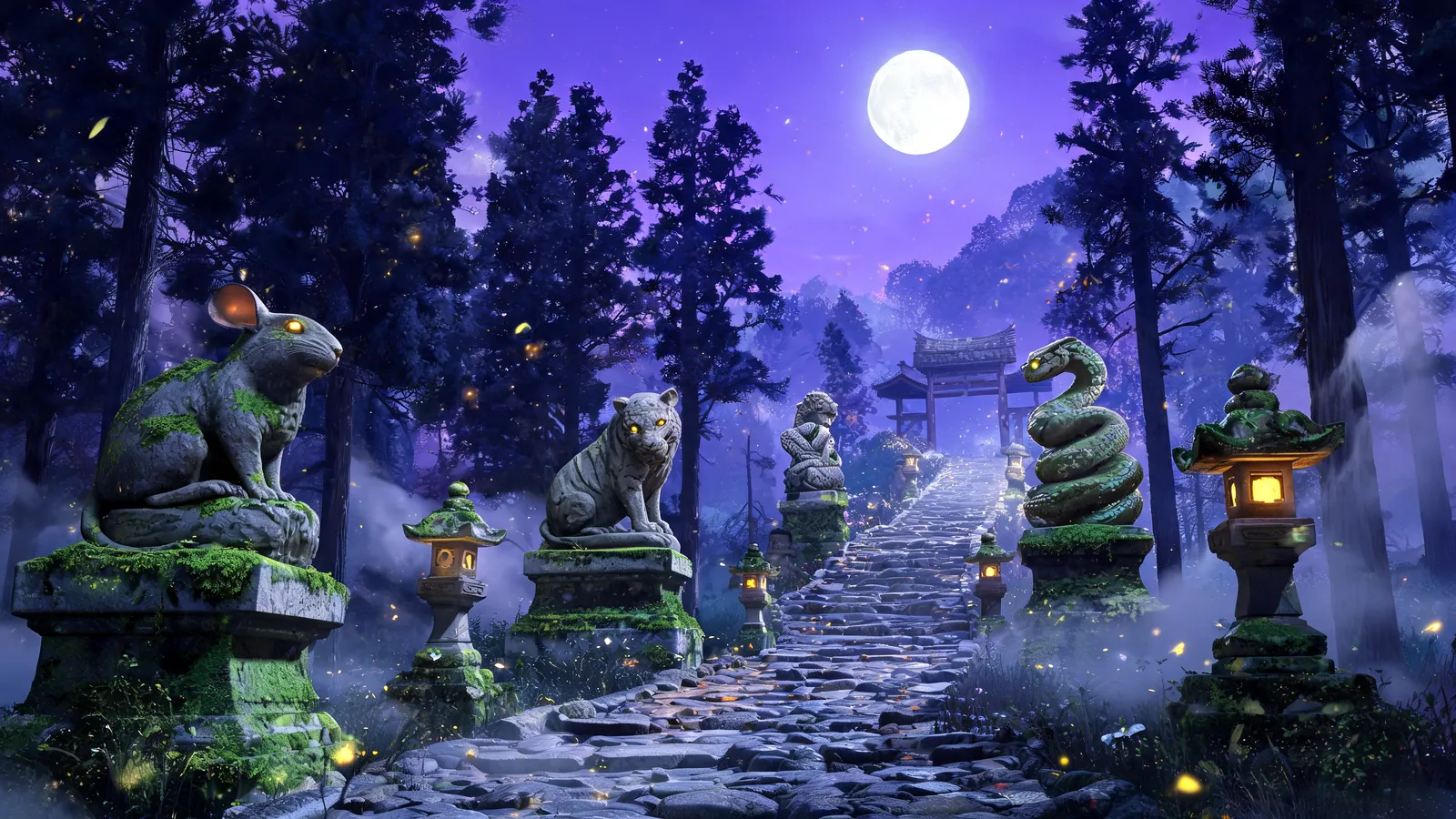
The basic hand signs in Naruto are named after the twelve animals of the Chinese zodiac: rat, ox, tiger, hare, dragon, snake, horse, ram, monkey, bird, dog and boar. In Japanese they're called jūnishi (十二支), the twelve branches.
That's a clever choice, because in old Japan the twelve branches were everywhere. They named the years, as they still do on New Year's cards. They also named the hours of the day and the directions of the compass. The "hour of the ox," ushi no koku, was the dead of night, roughly one to three in the morning. It was considered the hour when the boundary to the spirit world was thinnest. That's why the most notorious Japanese curse ritual, ushi no koku mairi, the shrine visit at the hour of the ox, took place exactly then. Ox and tiger together, ushitora, meant the northeast, the "demon gate," the direction from which bad influences were believed to enter a city.
In other words, the zodiac animals belong to the world of calendars, divination and directions, the territory of the court diviners of onmyōdō. I write more about them in the article on Abe no Seimei. As far as I know, there's no Japanese tradition that turned the twelve animals into twelve hand seals. That's where the series goes its own way, and it does so with a certain logic.
The real ninja hand seals have nine
The hand seals that ninjutsu actually took over are the Kuji-in (九字印), the seals of the nine characters:
Each character has its own seal and its own short mantra. The earliest sources for the nine characters come from China. The material reached Japan in several waves over the centuries and was developed there for centuries more, until it became a system that only exists in Japan: Daoism, Japanese folk magic and the esoteric Buddhism of Shingon, carried by the mountain ascetics of Shugendō and closely tied to Shintō. Ninjutsu lines took it over from there. If you'd like the whole story, I've written it up in the article on Kuji Kiri.
So when Naruto shows ninjas forming seals before a technique, the basic image is right. Ninja really did use hand seals, and they used them for protection and for steadying the mind. The fireballs are the series' contribution.
What Naruto borrowed without telling you
Once you start looking, the series is full of real Japan. A few examples:
Jiraiya, Orochimaru and Tsunade
This one surprises most fans. The three legendary ninja with their toad, snake and slug come from an Edo-period story, Jiraiya Gōketsu Monogatari (児雷也豪傑物語), the tale of the gallant Jiraiya. It was a hugely popular illustrated serial novel in the nineteenth century, then a kabuki play, and later an early Japanese film. In it, a hero who commands toad magic, a villain who commands snake magic and a heroine who commands slug magic are bound together in a three-way stalemate, because the toad fears the snake, the snake fears the slug and the slug fears the toad. Kishimoto took the names and the animals and built his own story around them.
The fox named Kurama
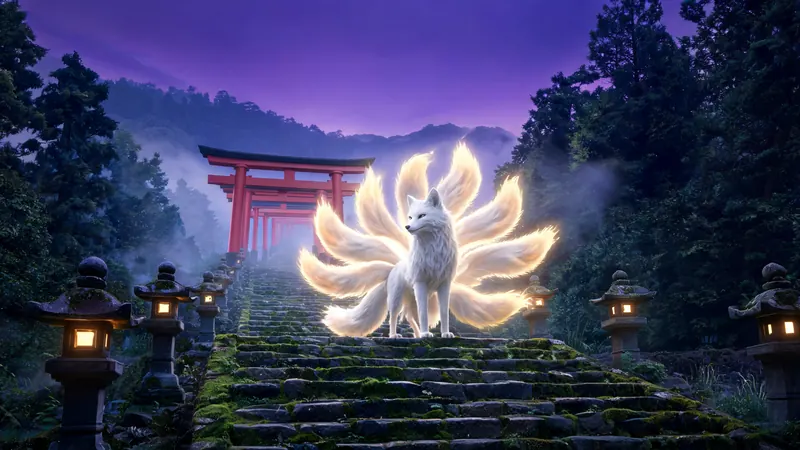
The nine-tailed fox sealed inside Naruto is called Kurama. That's the name of a real mountain range north of Kyoto, famous for its tengu and for the temple Kurama-dera. The fox has nothing to do with the mountain in Japanese legend, but the nine-tailed fox itself is a very old figure. I've written about both, the nine-tailed fox and the tengu of Kurama.
Six paths, Asura and Indra
The "Sage of the Six Paths" and the six paths of Pain point to the six realms of rebirth in Buddhism, rokudō (六道). The Rinnegan takes its name from rinne (輪廻), the wheel of rebirth. Asura and Indra, the two brothers whose rivalry runs through the whole story, are figures from Indian mythology who came to Japan with Buddhism as Ashura and Taishakuten. And Hashirama's giant wooden statue with countless arms clearly echoes Senju Kannon, the thousand-armed bodhisattva of compassion.
Dates for the Kuji Kiri live events and the Kuji Kiri Master Path are on the Kuji Kiri page of shingon-reiki.com. If you'd rather start at home, there's the Kuji Kiri Level 1 Online Course.
Where you can see the twelve animals in Japan today
The zodiac animals are easy to find. Many shrines sell small ceramic figures of the animal of the coming year, and the animal appears on almost every New Year's card.
For a much older encounter, go to Shin-Yakushiji in Nara. In its main hall sits the Medicine Buddha, Yakushi Nyorai, surrounded by twelve clay guardians, most of them from the eighth century: the twelve heavenly generals (jūni shinshō, 十二神将). They are among the oldest and most striking statues in Japan, and they're National Treasures. A later tradition linked each of the twelve generals with one of the twelve animals, so here the zodiac stands guard around a buddha. Japan rarely keeps its systems neatly apart.
And if you'd like to see the real hand seals in use, the best place is still the world of the mountain ascetics, for example on the three mountains of Dewa Sanzan or in the Ōmine range. Just don't expect anyone to breathe fire.
Which Naruto sign did you practice in front of the mirror as a kid?
The Japanese Grimoire Society
If the real hand seals interest you more than the screen version, the Japanese Grimoire Society is the place for it. We look at the original sources and at the practice behind them, in a group that enjoys anime and takes the tradition seriously. You can start with a free trial.
Have a look insideQuick answers
Are Naruto hand signs real?
Not as a system. The twelve signs in Naruto are named after the animals of the Chinese zodiac and were designed for the series. The real Japanese tradition of ninja hand seals is the Kuji-in, which has nine seals linked to nine characters.
What are the 12 Naruto hand signs based on?
On the twelve animals of the Chinese zodiac (rat, ox, tiger, hare, dragon, snake, horse, ram, monkey, bird, dog, boar). In Japan these twelve 'earthly branches' were used for the calendar, the hours of the day and the directions.
Where do Jiraiya, Orochimaru and Tsunade come from?
From a popular Edo-period story, Jiraiya Gōketsu Monogatari, in which a hero with toad magic, a villain with snake magic and a heroine with slug magic face each other. Naruto borrowed the names and the animals.
Sources and further reading
- David Waterhouse, "Notes on the kuji," in P. F. Kornicki and I. J. McMullen (eds.), Religion in Japan: Arrows to Heaven and Earth, Cambridge University Press, 1996.
- On the twelve heavenly generals of Shin-Yakushiji: Nara National Museum and the temple's own information on the Nara-period clay statues (National Treasures).
- On Jiraiya and the kabuki adaptations: Kabuki21, Jiraiya Gōketsu Monogatari; Google Arts & Culture, Summoning Monsters: From Jiraiya to Naruto.
Dr. Mark Hosak
Japanologist with a PhD from Heidelberg University and about three years of research at Kyoto University on Buddhist art, architecture and ritual. Shingon practitioner and researcher, successor of Taguchi Sensei in his line of Ninjutsu, author of books on Reiki and its Japanese roots. He walked all 88 temples of the Shikoku pilgrimage on foot.